In Cambodia there is a legend that is handed down:
"A young, foreign prince, Preah Thong, was exiled from his homeland. On his way around the world he met
the beautiful Neang Ne and fell in love with her. The maiden's father, the powerful king of the Naga people,
8
gave her in marriage to the young man, and then drank part of Oceanus. The land that emerged became his
wedding gift; that land was Cambodia…"
It is precisely to commemorate Preah Thong's journey and the birth of Cambodia that the Cambodian
wedding ceremony begins with the groom's procession to the bride-to-be’s home.
He brings traditional tributes such as gifts of fruit, fine frabics and sweets.
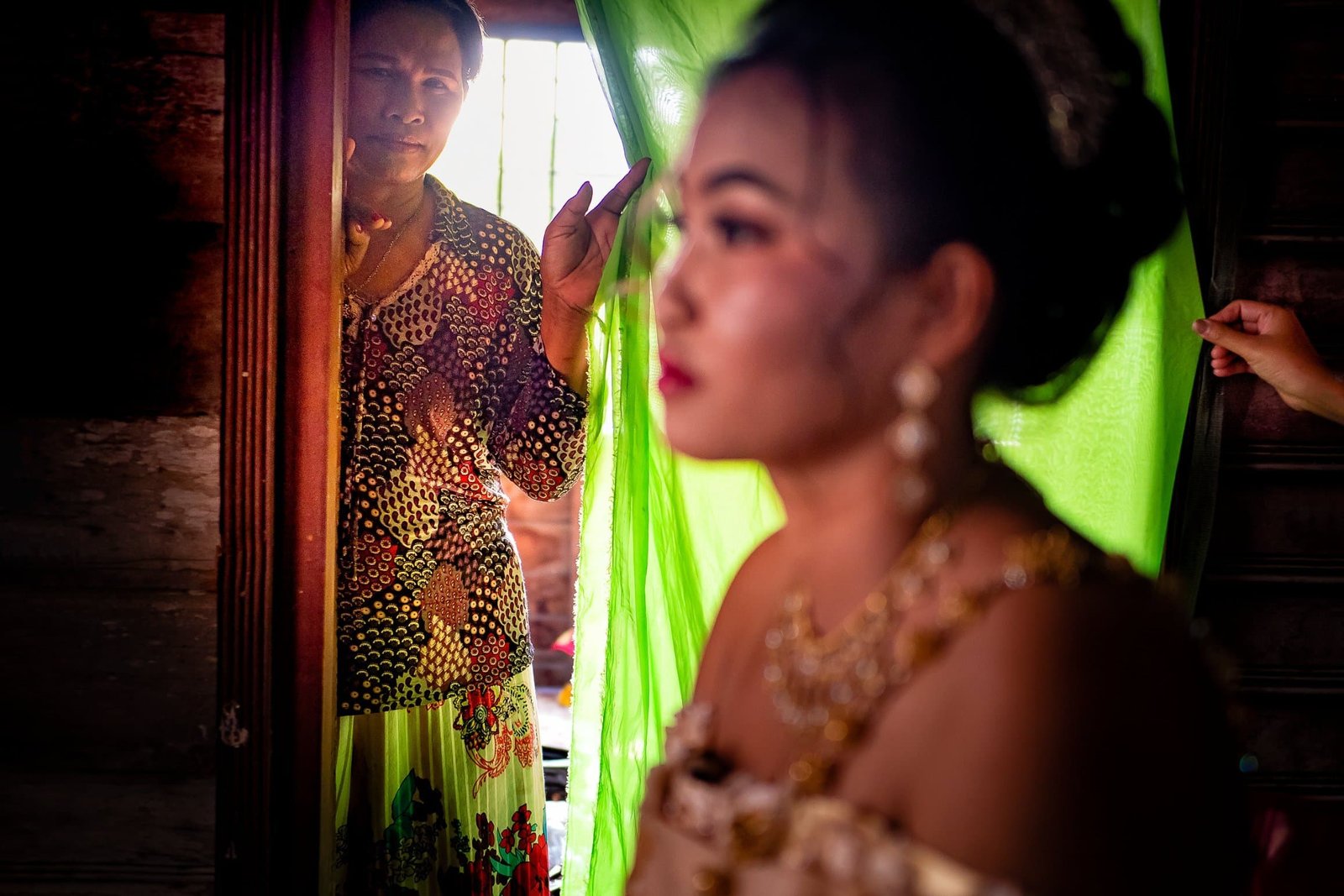
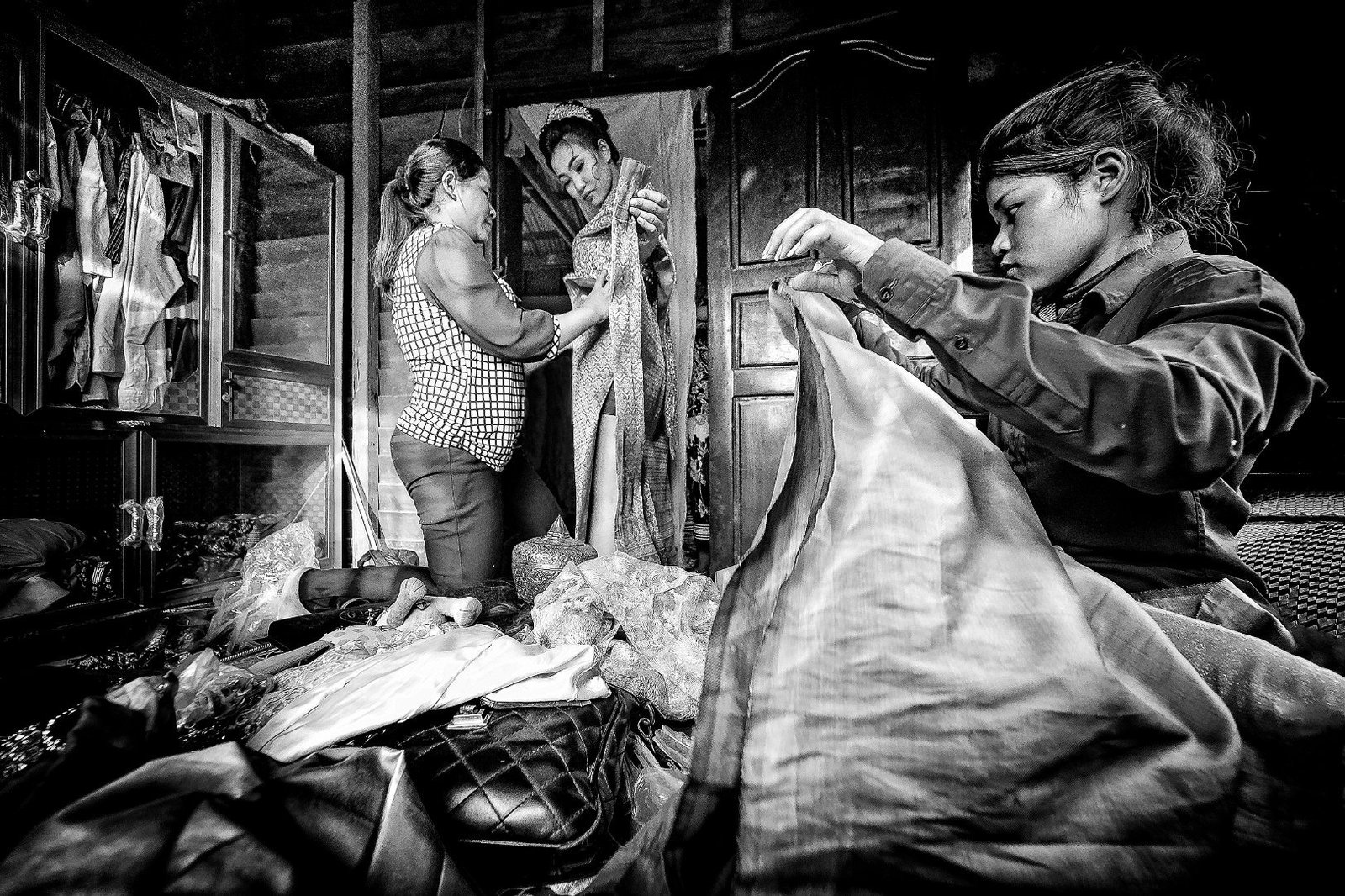
From early morning at the bride's house everyone is busy preparing the ancient blessing ceremony that will
soon take place.
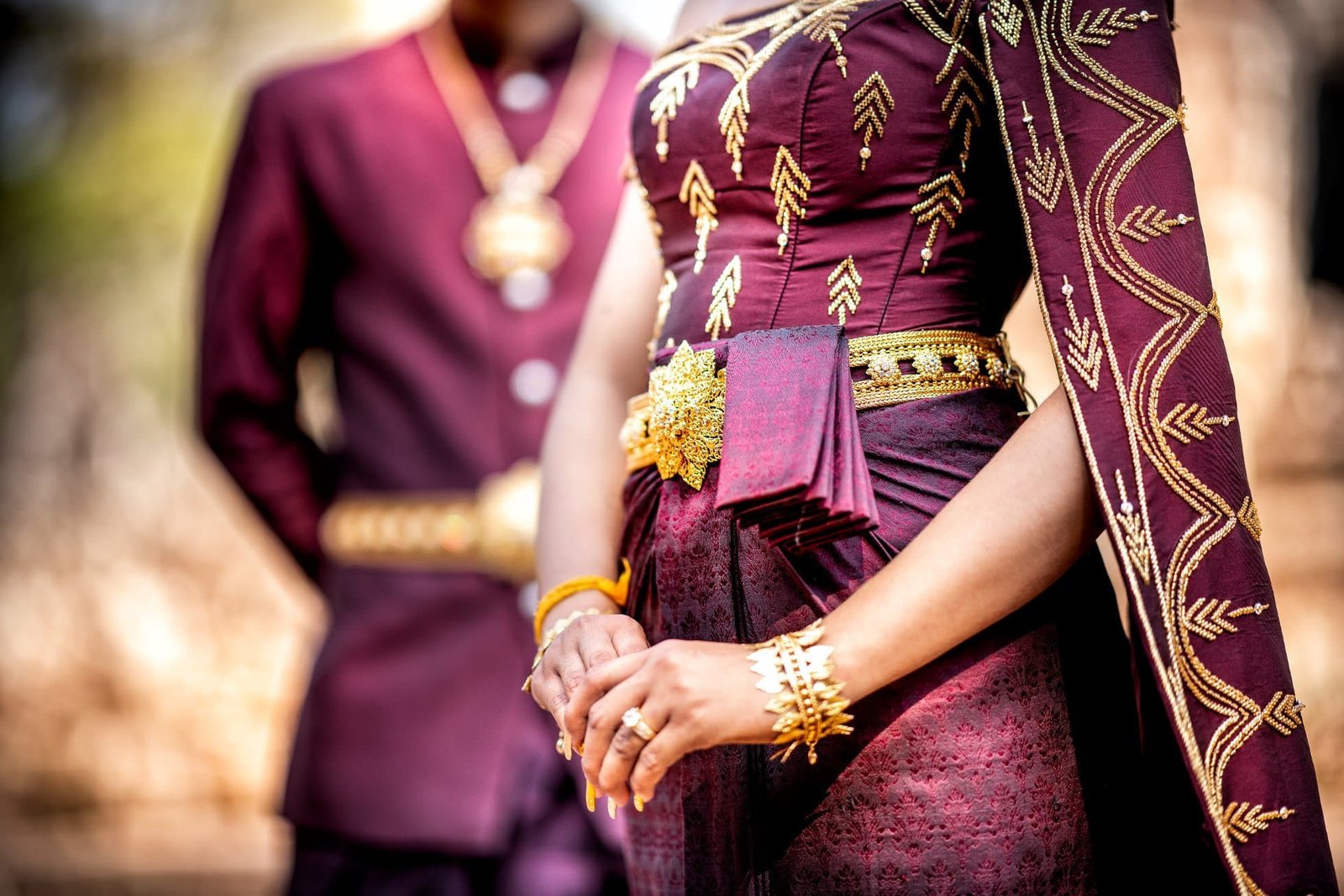
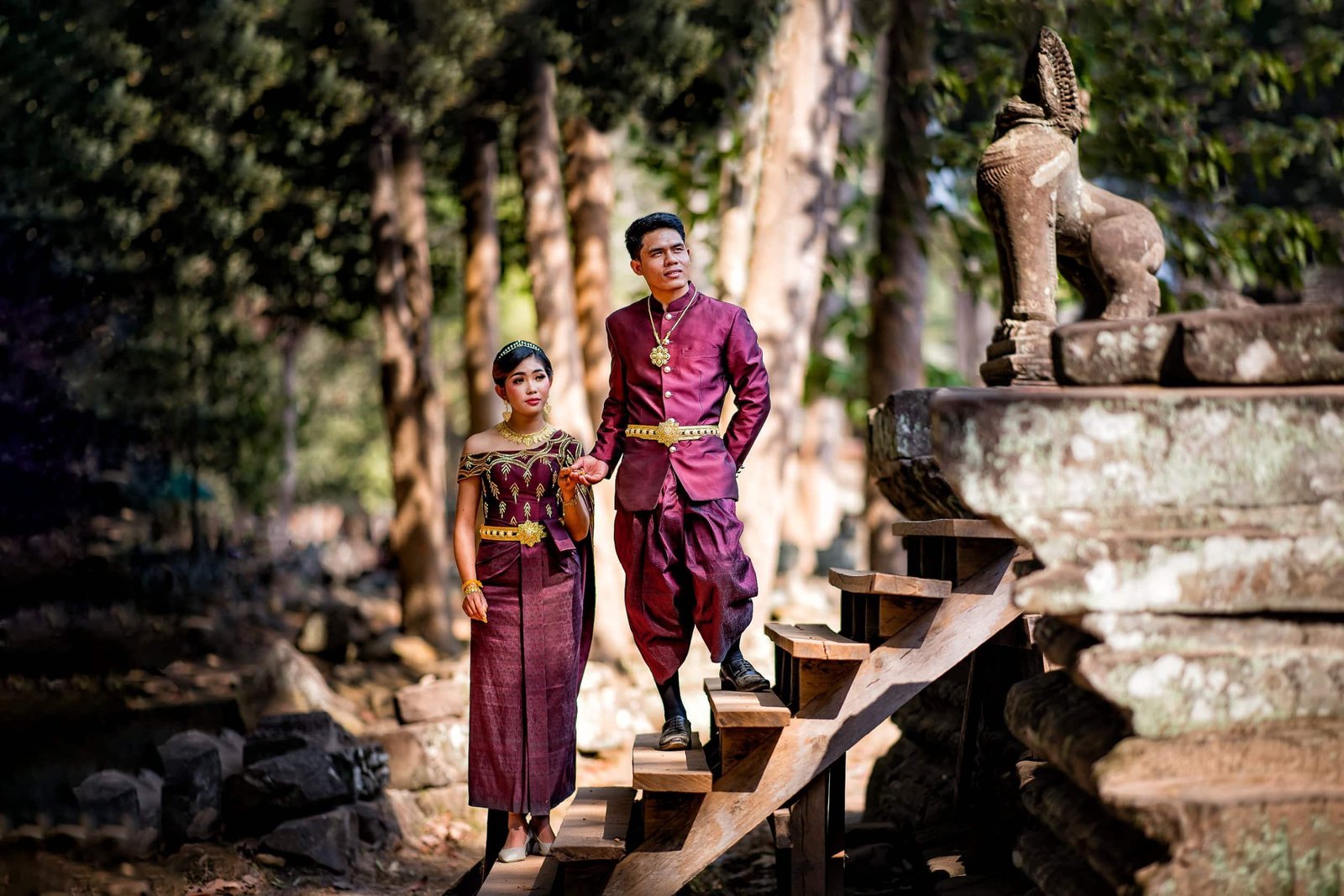
The bride wears a colorful traditional dress finely embroidered in gold.
Upon their arrival, both the groom, who has to hold a large knife, which is a symbol of safety and protection,
and the bride, with a cup in her hands that symbolizes the family's well-being, walk around in a procession.
They later move to the Buddhist temple and the actual "Phtam" ceremony can begin: the bride and groom,
sitting on the ground next to each other, are united in marriage by the Master of Ceremonies while holding a
large knife in their hands.
A red cloth bracelet is then tied to their wrists to officially sanction their union ; it must be worn for a week.
The ceremony continues with the offering of a candle and some rice to the bride and groom: the candle
symbolizes the first child that the couple will have and must be lit at the baby’s birth, while the rice is used to
celebrate the spouses’ new common life. Once they arrive at their new home, the newlyweds, will have to
cook and eat it together.
The bride will then cut the fruit received as a gift and give it to the her husband, and they will eat it together.
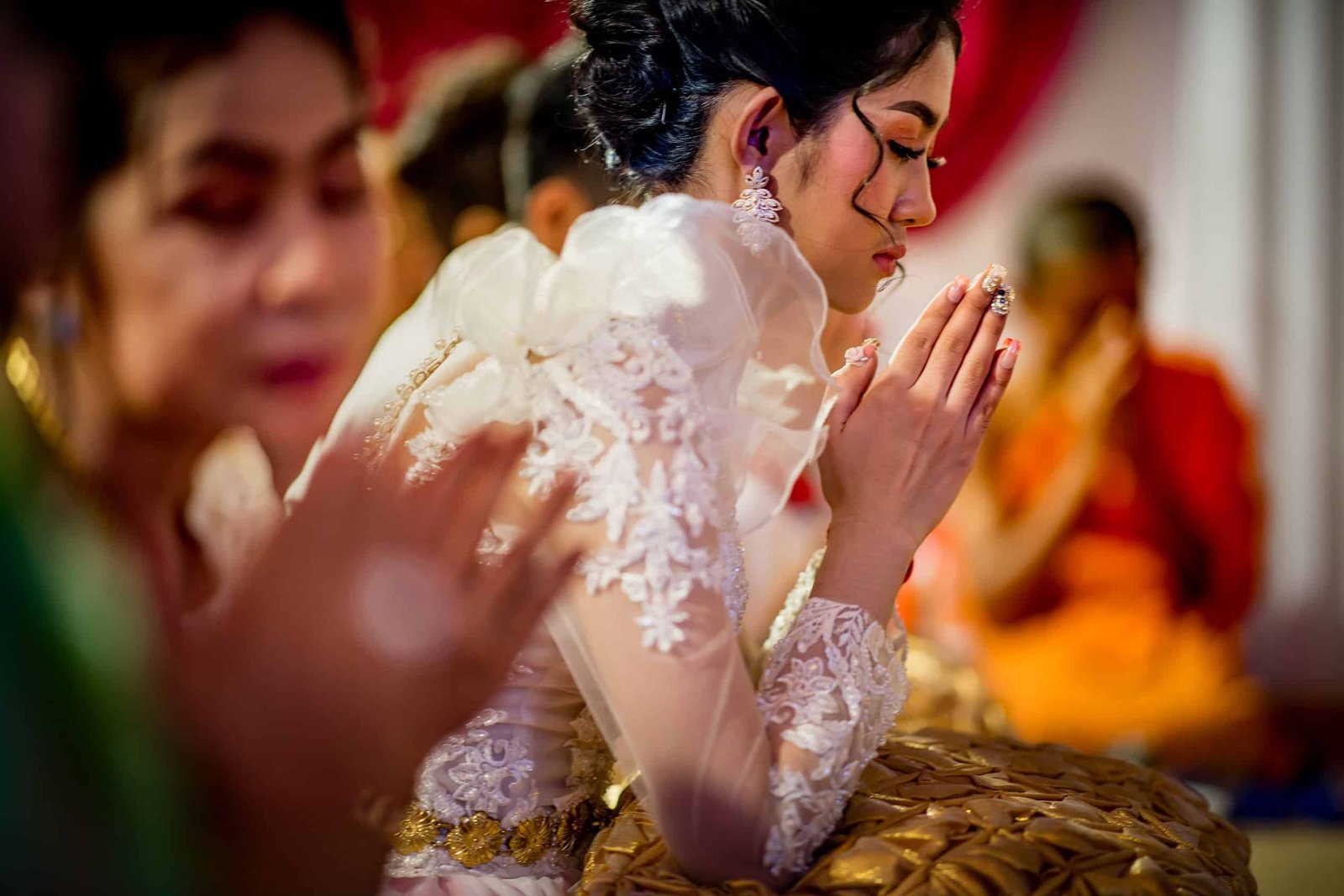
The wedding is blessed by Buddhist monks: three Master Monks recite prayers and blessings for the couple.
After the ceremony at the temple, all the guests gather for a sumptuous wedding banquet.
The table is a riot
of colors and flavors, with traditional Cambodian dishes such as "amok" and "bai sach chrouk”. Traditional
Cambodian music fills the air as guests dance and have fun.
A funny show animates the wedding: the bride and groom are offered money in exchange for a fake haircut
(guests pretend to cut their hair, then offer them a mirror and money in return).
Cambodia is a wonderful
country to discover, between the memory of ancient kingdoms, marked by extraordinary vestiges, and the
still vivid memory of its complex recent history. Cambodia’s soundtrack is a mixture of the monks’ voice, the
markets’ chatter, the sound of the water that dictates the time amidst the houses on wooden legs of the Tonle
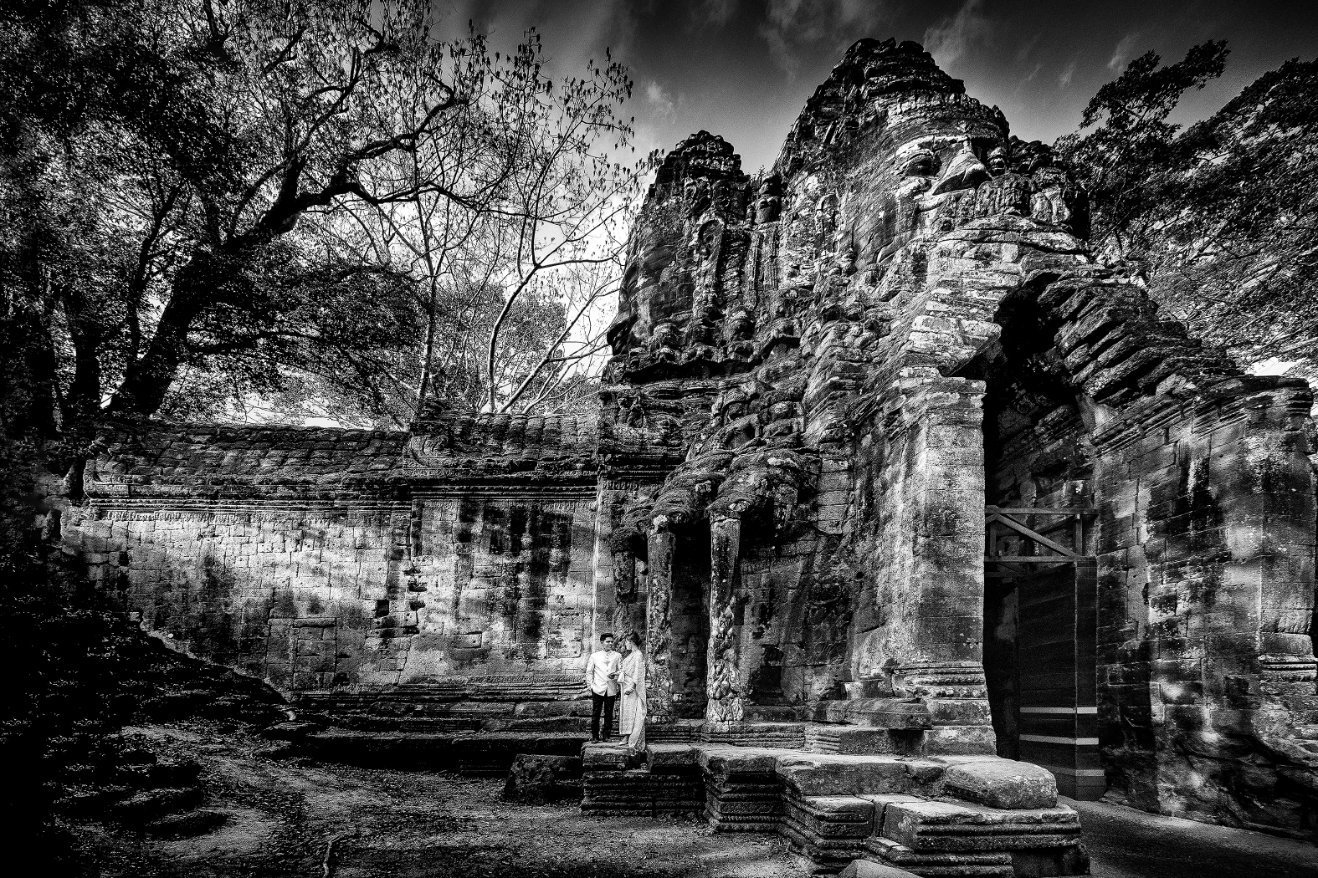
Sap Lake, nature’s voice that dwells in the mysterious temples wrapped in immense roots and the hieratic
silence of the great stone faces. They are the thousand-year-old temples which nature has reclaimed for itself.
But Cambodia is above all an experience lived among hospitable, welcoming and cheerful people.
And this most of all has left an indelible impression and unique emotins in our eyes and hearts.